Introduction
Ductwork colliding with a structural beam or a sprinkler line routed straight through a cable tray is a major design conflict during an MEP installation. This is one of the most common and the most expensive problems in the construction industry. When Mechanical, Electrical and Plumbing systems are designed by different teams working in isolation, these issues often arise very late, which are significantly more expensive to resolve on-site.
This is the problem BIM clash detection was built to solve. Today, for AEC professionals, clash detection has become a genuine cost-control tool. At Tesla BIM Services, we have provided clash detection services for almost two decades. Based on our experience across a wide range of projects, effective clash detection can reduce construction costs by 5-10% or more, while shortening project timelines by 7-10%. Here’s how clash detection consistently saves projects time and money, and why it has become so important today.
What does clash detection actually do?
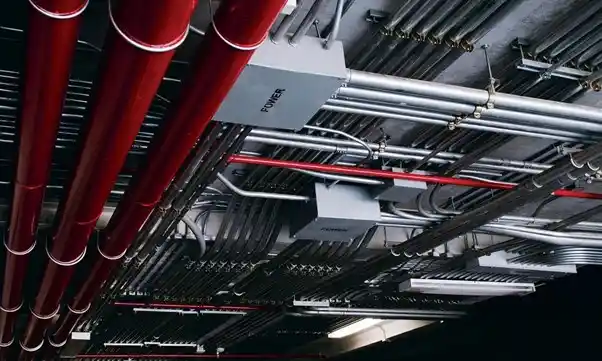
Detecting clashes during the design phase prevents costly surprises during construction, allowing projects to move forward with fewer delays and change orders.
Primarily, clash detection means overlaying 3D models from different disciplines within a single coordinated environment. Using software like Navisworks or Revit, every clash between these models is flagged, be it an intersection or a violation of clearance spaces. There are three types of clashes:
- Hard Clashes: when two or more objects actually intersect each other physically.
- Soft Clashes: when two objects interrupt each other’s clearance zones, insulation, or safety requirements.
- 4D (workflow) clashes: when two or more trades are scheduled to work in the same area at the same time.
Earlier, clash detection typically took place on site, after materials were ordered and labour had been mobilized. Fixing a clash on site often requires demolition and the reinstallation of systems, resulting in wasted time, effort, material, and money.
On the other hand, fixing a clash digitally costs virtually nothing. Done during the design phase, clash detection enables project teams to resolve conflicts before any work is done on site.
UK-led research on major infrastructure projects has found that BIM-enabled clash detection can save an estimated 20% of a project’s contract value by identifying and resolving clashes before construction begins — SOURCE
Where the Real Savings Come From
Clash detection and its financial advantages aren’t just theoretical: they show up in tangible ways.
Reduced rework
Rework is one of the costliest problems faced by contractors and can account for up to 30% of the total project cost. It results from miscommunication, design conflicts, and improper installations, especially for MEP systems.
On-site clashes can trigger rework across not one, but many trades at once, which becomes notoriously expensive. Every clash caught by the federated BIM model during clash detection does not need to be resolved on site, saving time and money.
Fewer change orders
With clash detection, issues are resolved before the tender stage, allowing contractors to price the job accurately from the beginning. As a result, no labour hours are spent on demolition or system reinstallation and clients are less likely to face unexpected variations halfway through construction.
Shorter programmes
Time is money. Idle labour on site is an avoidable cost on any construction project. Through streamlined coordination and fewer on-site interruptions, work can progress more efficiently, without clashes causing unnecessary delays or additional costs.
Better material planning
Materials only need to be purchased once, and accurate quantity calculations ensure there is no excess material left over. Once routing is confirmed digitally, ductwork, cables and pipe quantities can be ordered with confidence. This also eliminates the need for last-minute procurement at premium prices.
Improved coordination
Separate consultants prepare different drawing sets for MEP works. A shared, coordinated, clash-checked model becomes a single source of truth for all the stakeholders, reducing conflicts and improving coordination. This also improves the contractors’ reputation for faster, within-budget project delivery.
Why This Matters More for Complex, Modern Buildings
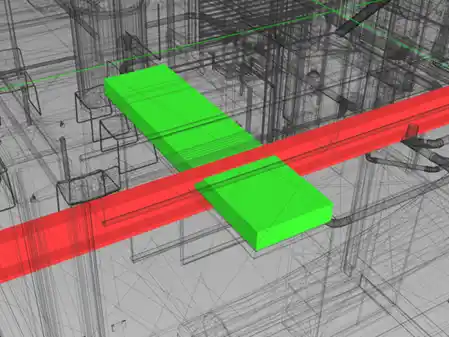
Modern buildings contain more systems than ever before, all competing for the same limited space. BIM provides the coordination needed to ensure these systems fit together efficiently.
Smart building sensors, renewable energy integration, sophisticated HVAC systems, and strict fire safety requirements mean that new buildings have far more services than they did a decade ago. This increased density makes manual coordination increasingly obsolete because the margin for error is extremely small. As a result, automated clash detection has become a standard practice in mid-to-large-scale projects across Europe and the UK.
Frameworks such as the UK Building Safety Act 2022 and BIM Level 2 requirements have also made European architects and project teams more accountable for their projects. In this context, clash detection provides a documented record of design coordination and due diligence.
Where Tesla BIM Services Fits In
MEP BIM coordination is an integral part of what we do at Tesla BIM Services. We work with AEC professionals to perform clash detection and produce coordinated, construction-ready documentation that contractors can rely on. We deliver BIM models and documentation across LOD 100 through LOD 500, in accordance with European and UK standards, including ISO 19650.
With experience spanning over 10,000 projects, we have seen firsthand how effective clash detection can transform a project, resulting in tighter budgets, shorter timelines and far fewer surprises on site.
In Conclusion
Clash detection is not just a box-ticking, optional exercise. It can actually become the difference between a profitable project and a loss-making one. As the saying goes, prevention is always better than cure. Clash detection helps identify and resolve issues when they are still inexpensive to fix. For complex MEP systems, it often pays for itself many times over once construction begins.
If your next project involves tight spaces with multiple building services, invest in clash detection early and you could save thousands in project costs. Get in touch with Tesla BIM Services and we’ll use our experience and industry-leading tools to deliver a coordinated, clash-free model that fits your schedule and budget.
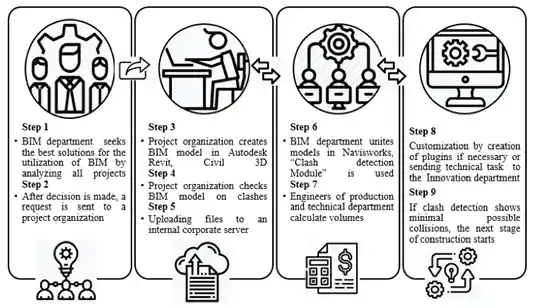
This workflow shows how BIM moves from internal coordination to model checking and clash detection, creating a smoother path toward delivery.
FAQs
What is the difference between clash detection in Revit and Navisworks?
Revit and Navisworks serve different purposes, although both are widely used for BIM coordination. Revit is a 3D modelling tool with a built-in interference check feature that provides instant feedback while modelling. This makes it ideal for quick coordination checks during the early design stages. However, its capabilities are more limited when coordinating multiple disciplines.
Navisworks, on the other hand, is a dedicated coordination and project review tool. It can federate models from multiple sources and perform comprehensive clash detection across all disciplines simultaneously. In practice, the most effective approach is to use Revit for modelling and Navisworks for whole-project coordination.
What Level of Detail (LOD) is required for effective clash detection?
For meaningful clash detection, models should reach at least LOD 300, where elements have accurate geometry and are positioned correctly within the model. For construction coordination, LOD 350 is generally the standard, as it includes critical information about connections, interfaces and penetrations between building elements. For prefabrication and shop drawings, LOD 400 is typically required. Clash detection carried out on models at LOD 350 or above provides a level of coordination that is sufficient to prevent most on-site issues.
Who is responsible for clash detection on a construction project?
Clash detection is typically the responsibility of the BIM Coordinator or BIM Manager. Their role includes federating the discipline models, defining clash tests, running coordination analyses and leading coordination meetings. However, each discipline team is responsible for resolving the clashes identified within its own model.
During construction, contractors also continue the coordination process through shop drawings. The most successful projects are those in which all stakeholders actively participate in coordination meetings and take ownership of resolving issues within their respective models.
What ROI can contractors realistically expect from clash detection?
Industry data shows that every unit of currency invested in clash detection can save between 8 and 10 units during construction. These savings come from avoiding rework, reducing material waste, shortening project timelines and minimising subcontractor claims. The return on investment is particularly high for MEP installations, where services are densely packed and any on-site modifications are both complex and expensive.