
The construction sector constantly faces demands to complete projects more quickly, minimize waste, enhance resource use, and increase predictability. Traditional construction processes often involve fragmented communication, excess material, project timeline delays, and ineffective coordination among stakeholders. This is where the integration of lean construction and BIM (Building Information Modeling) becomes highly effective.
Lean construction aims to maximize value while reducing waste throughout the lifespan of a project. In contrast, BIM delivers a data-driven digital platform that enhances planning, collaboration, visualization, and execution. When combined, they enable construction teams to achieve greater productivity, improved cost management, and more favorable project results.
As construction projects advance in complexity, BIM has emerged as an essential tool for effectively applying lean construction practices.
What is Lean Construction?
Lean construction is a project delivery methodology that focuses on maximizing value while minimizing waste throughout the construction process. Based on principles of lean manufacturing, this approach aims to improve efficiency, promote better teamwork, ensure a reliable workflow, and optimize resource use in construction projects.
This methodology emphasizes continuous improvement, better coordination among stakeholders, reduced rework, optimized scheduling, and efficient use of materials, labor, and time to deliver projects more effectively.
Principles of Lean Construction
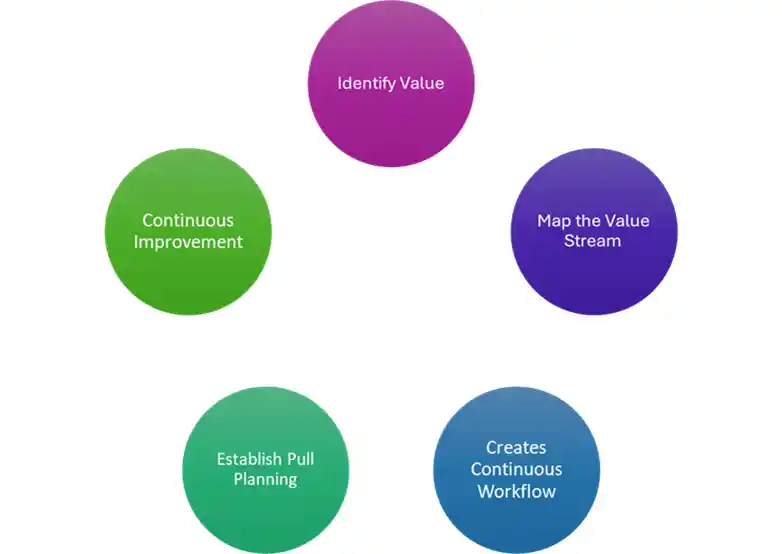
The principles of lean construction provide a structured framework for improving project efficiency, reducing waste, optimizing workflows, and delivering greater value throughout the construction lifecycle.
1. Identify Value
Lean construction begins by understanding what creates value for the client. Every construction activity, resource, and process should contribute toward achieving project goals, quality expectations, budget targets, and delivery timelines.
2. Map the Value Stream
This principle focuses on analyzing the entire construction workflow to identify activities that add value and eliminate processes that create delays, waste, or inefficiencies.
3. Creates Continuous Workflow
Lean construction aims to establish smooth and uninterrupted project workflows. Proper planning, coordination, and scheduling help reduce bottlenecks, waiting time, and resource conflicts during construction.
4. Establish Pull Planning
In lean construction, work is scheduled based on actual project demand rather than assumptions. Pull planning improves task sequencing, resource allocation, and coordination between project teams.
5. Continuous Improvement
Lean construction promotes ongoing evaluation and process improvement throughout the project lifecycle. Teams continuously identify inefficiencies, improve workflows, and optimize project performance for better outcomes.
Benefits of Lean Construction
The implementation of lean construction methodologies provides several benefits to construction projects, including-
- Reduced project waste and material loss.
- Improved project scheduling and workflow management.
- Better cost control and budget management.
- Increased construction productivity.
- Reduced project delays and conflicts.
- Enhanced quality control and construction accuracy.
- Improved safety and site coordination.
- Faster project delivery timelines.
- Better communication between project teams.
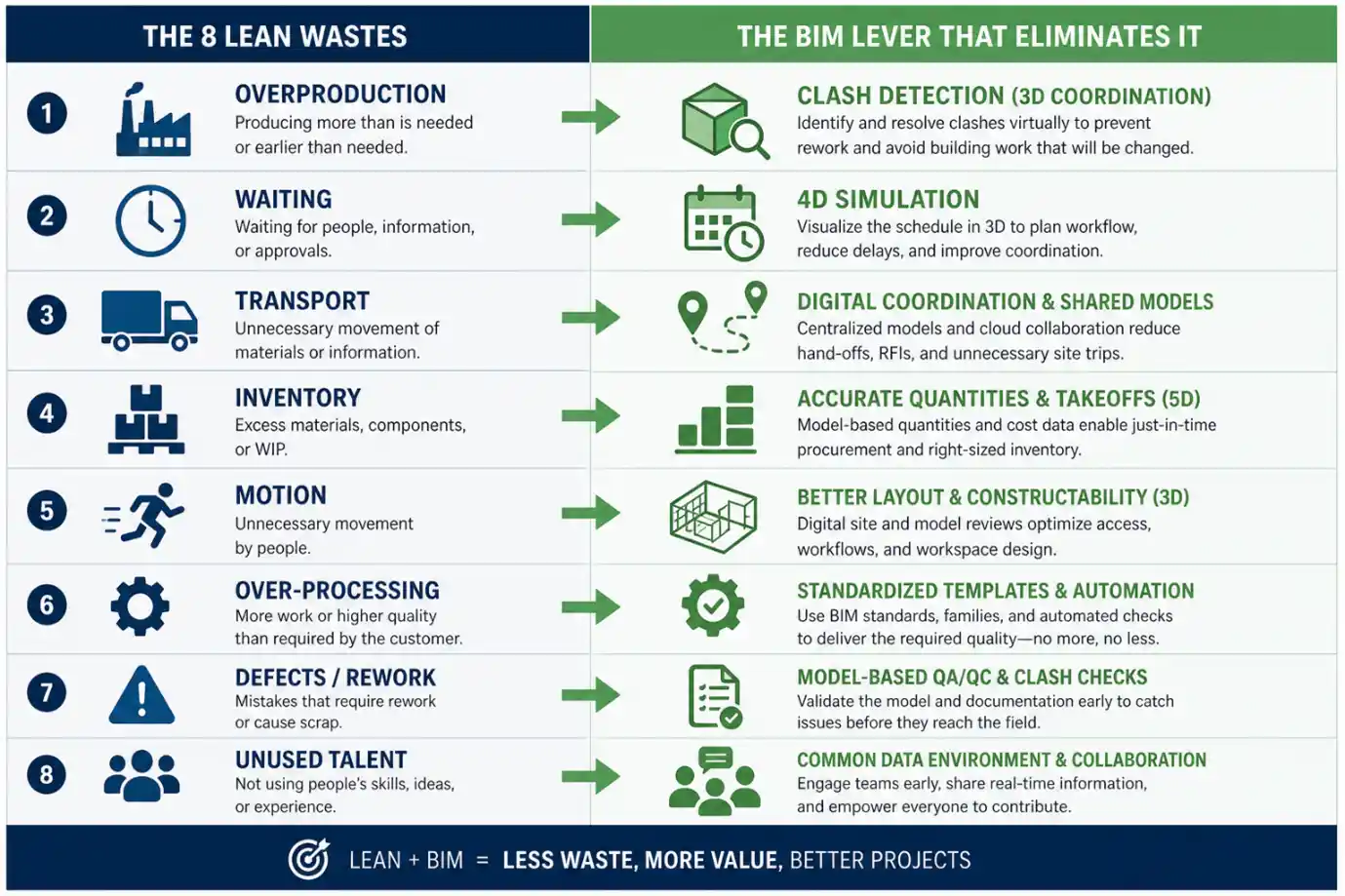
8 Wastes of Lean Construction × BIM Countermeasures
The Integration of BIM & Lean Construction
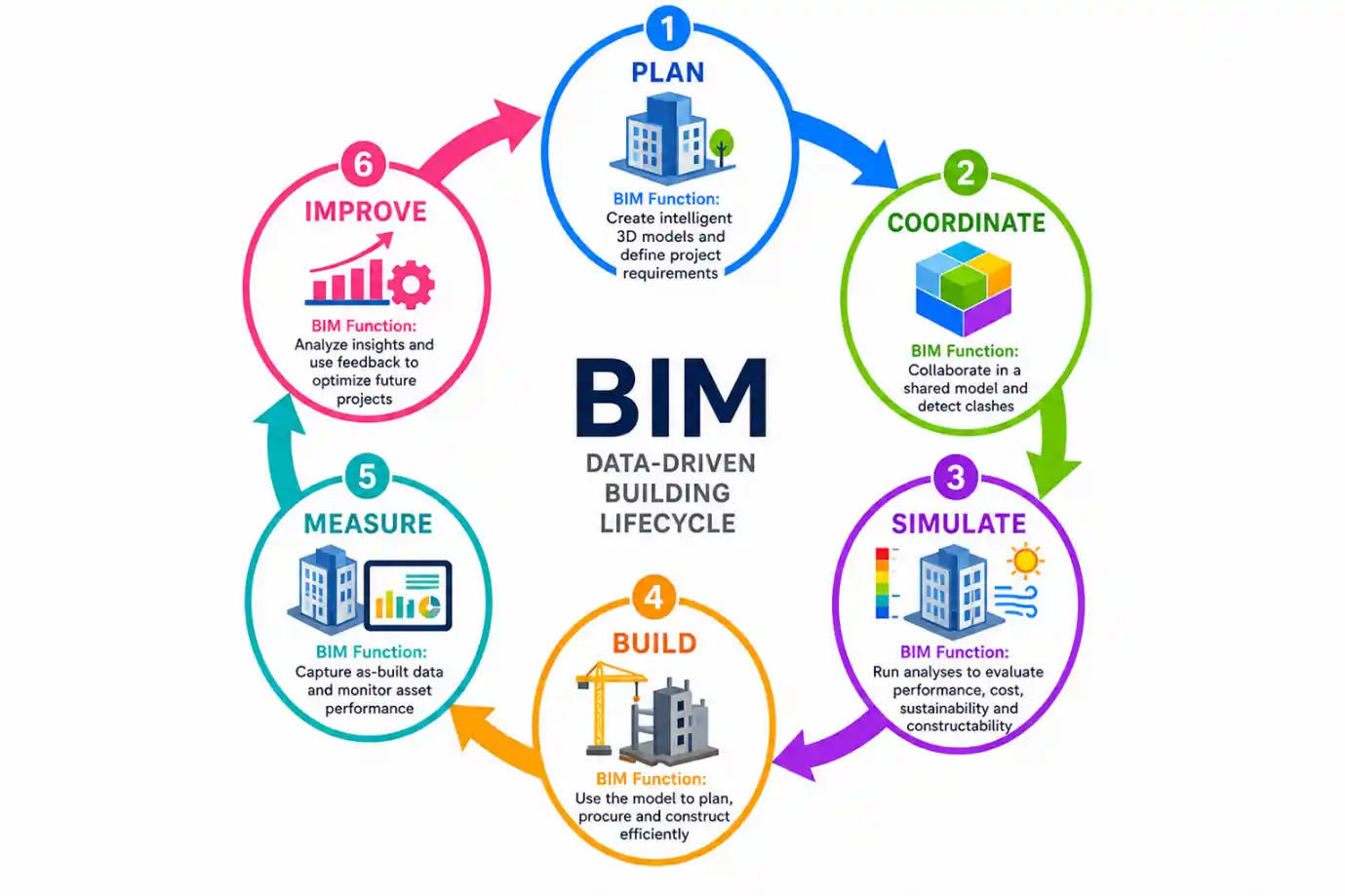
BIM + Lean Continuous-Improvement Flywheel
Improves Design & Multidisciplinary Coordination
Construction projects involve collaboration between architects, structural engineers, MEP consultants, contractors, and project managers. In traditional workflows, when different teams communicate separately, it often leads to problems such as design inconsistencies, coordination errors, and project delays.
BIM creates a centralized digital model that enables all stakeholders to access synchronized project information in real time. This improves multidisciplinary coordination, reduces communication gaps, and helps teams identify design conflicts early in the project, before they affect construction activities.
Research shows that
BIM combined with QR-based tracking and value stream mapping delivered a 12% increase in labor productivity and an 18% decrease in idle time on-site — SOURCE
Allows Early Clash Detection & Issue Resolution
Rework is one of the biggest causes of construction waste resulting from undetected clashes between building systems. Conflicts between structural, mechanical, plumbing, and electrical components can lead to costly site modifications and schedule disruptions if discovered during construction.
BIM-based clash detection helps project teams identify and resolve these conflicts during the preconstruction phase. By solving issues digitally before site execution begins, contractors can reduce material waste, avoid delays, and improve construction efficiency while maintaining smoother project workflows.
Enhances Construction Planning & Scheduling
Lean construction relies heavily on accurate scheduling and efficient workflow management to ensure the project progresses continuously without interruptions. Poor planning often results in resource conflicts, workflow interruptions, and construction delays that negatively impact project performance.
BIM improves construction planning through 4D simulation in which project schedules are linked to 3D models to visualize construction activities over time. This allows teams to analyze task sequencing, optimize scheduling strategies, and improve project predictability before actual construction begins.
Did You Know
Lean digital integration can compress project schedules by 2–15% depending on project size and digital maturity.
Improves Workflow Transparency
Lean construction aims to create stable and uninterrupted workflows across all project phases. However, limited visibility into project activities can make it difficult for teams to identify inefficiencies and respond to challenges quickly.
BIM improves workflow transparency by providing real-time access to the project progress, coordination updates, and construction data within a centralized platform. Project managers can monitor workflows more effectively, identify bottlenecks early, and make informed decisions to maintain operational efficiency.
Reduces Material Waste & Resource Inefficiencies
Material overordering, inaccurate quantity estimation, and poor procurement planning contribute significantly to waste generation in construction projects. These inefficiencies increase project costs and negatively affect sustainability goals.
BIM improves quantity take-offs and the accuracy of material estimates by generating data directly from intelligent building models. Contractors can plan procurement more efficiently, reduce excess inventory, and optimize resource utilization across construction stages.
Supports Pull Planning & Lean Scheduling
Lean construction uses a pull-based planning approach, scheduling activities based on actual project requirements and site readiness. Without proper coordination, construction teams often face workflow interruptions and waiting time between activities.
BIM supports pull planning by helping teams visualize construction sequences, workspace coordination, and activity dependencies in advance. This improves scheduling accuracy, enhances task coordination, and creates smoother workflow transitions across construction operations.
Improves Construction Site Logistics
Construction site congestion, poor material movement, and inefficient equipment planning often reduce productivity and create operational challenges on-site. Improper site logistics can also increase safety risks and workflow disruptions.
BIM helps project teams simulate site operations before execution begins. Contractors can optimize material storage areas, crane placements, worker access routes, and equipment movement plans to improve construction site efficiency and reduce operational bottlenecks.
Supports Prefabrication & Modular Construction
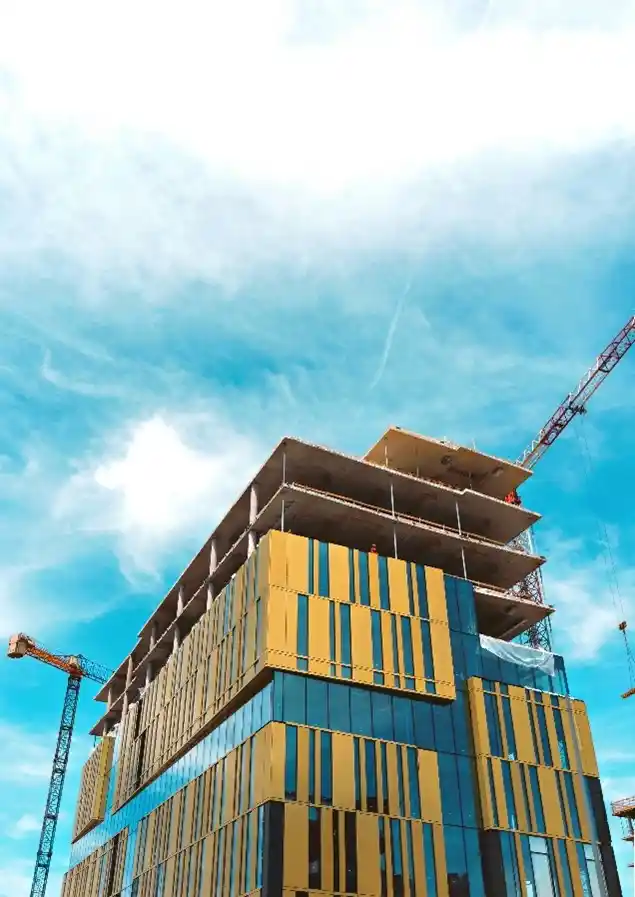
Prefabrication/modular construction
Prefabrication and modular construction are important lean strategies because they reduce dependence on on-site labor, improve quality control, and minimize construction waste. However, successful prefabrication requires highly accurate and coordinated design information.
BIM provides fabrication-ready digital models with precise dimensions and coordinated project data. Manufacturers can use these models for off-site production, reducing installation errors and improving assembly efficiency during construction.
Enhances Cost Predictability & Budget Control
Unexpected cost overruns are commonly caused by design revisions, material wastage, rework, and inefficient project coordination. Maintaining financial control becomes challenging when project data is fragmented across multiple teams and systems.
BIM improves cost predictability by integrating quantities, schedules, and construction data into a centralized model. Project teams can monitor cost impacts more effectively, evaluate design alternatives, and maintain better budget control throughout the project lifecycle.
Strengthens Quality Management
Lean construction focuses on delivering high-quality outcomes while minimizing defects and rework. Inconsistent documentation and poor field coordination can negatively impact construction quality and project performance.
BIM improves quality management by providing accurate construction documentation, model-based verification, and better visualization of complex building systems. Teams can identify deviations early, improve installation accuracy, and maintain consistent quality standards throughout project execution.
Allows Data-Driven Decision Making
Modern construction projects generate large amounts of data related to scheduling, procurement, coordination, and resource management. Without proper analysis, this information often remains underutilized during project execution.
BIM provides real-time access to centralized project data, enabling teams to make informed, proactive decisions. Data-driven project management improves operational control, reduces uncertainty, and helps organizations respond more effectively to project challenges.
Supports Continuous Improvement
Continuous improvement is a core principle of lean construction, focusing on optimizing processes and improving project performance over time. Construction organizations must regularly evaluate workflows and identify areas for operational improvement.
BIM helps teams analyze project performance through digital documentation, workflow tracking, and project analysis. These insights allow organizations to refine construction strategies, improve coordination processes, and enhance productivity across future projects.
Tools & Resources Used in Lean Construction Processes
Successful lean construction implementations depend on a combination of collaborative workflows, digital technologies, and process optimization tools that help teams improve project efficiency and minimize operational waste.
Commonly used tools and resources include:
- Process mapping tools for analyzing workflow inefficiencies.
- BIM Execution Plans (BEP) for standardized project coordination
- Value stream mapping techniques for identifying non-value-added activities.
- Visual management dashboards for tracking project performance.
- Digital pull planning systems for collaborative scheduling.
- Design coordination platforms for multidisciplinary model integration.
- Predictive analysis tools for risk forecasting and decision support.
- Industry guidelines and lean construction training resources.
These technologies and frameworks help construction teams streamline communication, improve planning accuracy, optimize resource utilization, and support continuous improvement throughout the project lifecycle.
The Future of BIM & Lean Construction in AEC Projects
The integration of BIM and lean construction is becoming increasingly important across residential, commercial, healthcare, industrial, and infrastructural projects.
As projects are becoming more data-intensive and schedule-sensitive, traditional management approaches struggle to maintain efficiency. BIM provides the digital foundation needed to implement lean methodologies at scale.
From improving collaboration and reducing waste to supporting prefabrication and workflow optimization, BIM helps construction teams in delivering projects with greater efficiency and operational control.
Here’s something interesting
A MDPI review confirms BIM–Lean integration significantly improves productivity and reduces environmental impact, with data interoperability remaining the leading adoption barrier.
Conclusion
Lean construction is transforming how projects are planned, managed, and executed across the AEC industry. However, implementing lean principles successfully requires accurate information, proactive coordination, and efficient communication.
BIM supports lean construction methodologies by creating an intelligent, collaborative, and data-driven construction environment. It helps eliminate waste, improve scheduling accuracy, enhance project coordination, optimize resource utilization, and increase overall construction efficiency.
As the industry continues to move toward digital construction practices, BIM will remain a key technology for organizations seeking to achieve lean, sustainable, and high-performance project delivery.
FAQ’s
How does BIM help reduce waste in lean construction projects?
BIM minimizes waste by improving quantity accuracy, detecting clashes before construction, optimizing material procurement, and reducing rework.
Can BIM support pull planning in lean construction?
Yes, BIM supports pull planning by improving workflow visualization, task sequencing, and resource coordination, enabling more reliable construction scheduling.
Why are BIM and lean construction increasingly used together?
BIM and lean construction complement each other by combining digital project management with process optimization, resulting in greater efficiency, cost control, and project predictability.
Want a leaner build? Partner with our BIM experts to cut waste, tighten schedules, and deliver projects with greater control.